Filling Open Dental Slots: A 2026 Patient Reactivation Guide
Manage overdue patients and fill appointment slots efficiently with our 2026 guide for Open Dental, focusing on TCPA compliance, AI automation, and workflows.
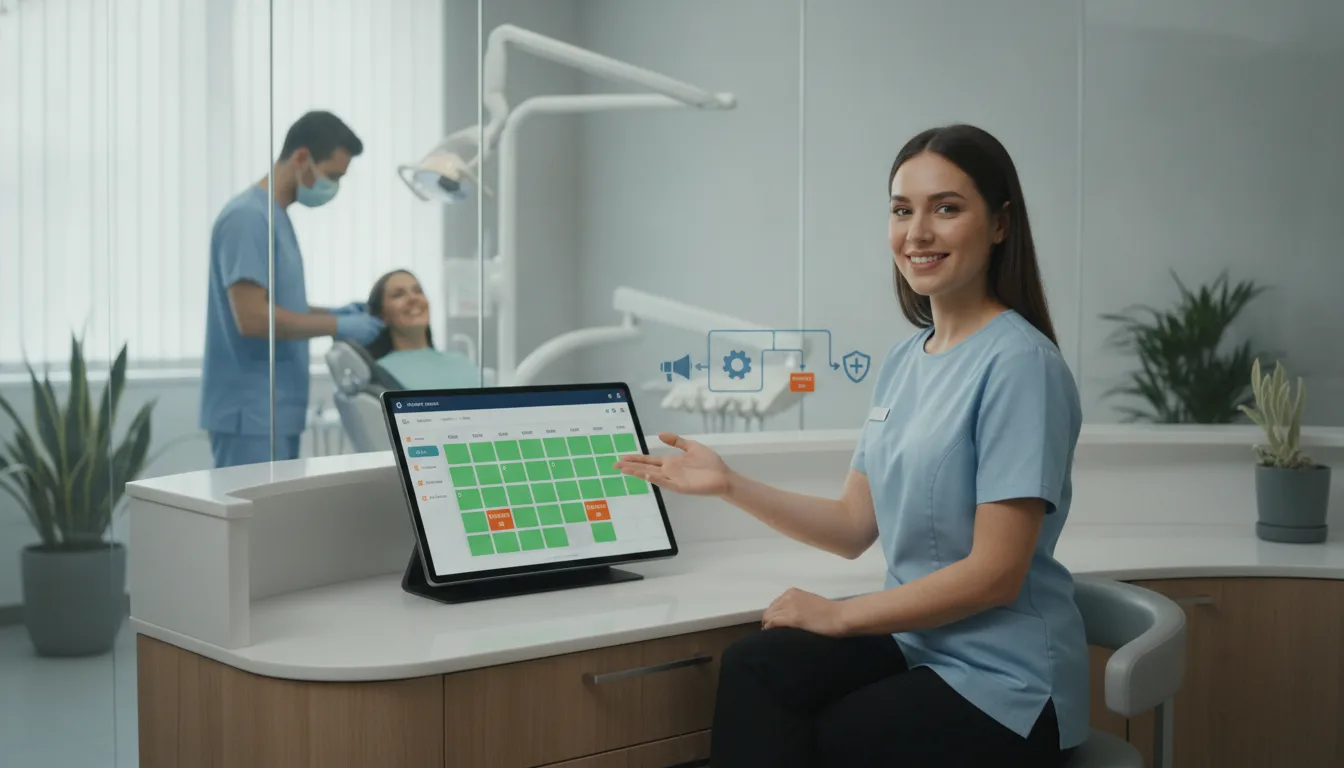
Summary: To fill open dental slots effectively, coordinate with overdue patients using a structured recall and reactivation workflow. Leverage patient data in your practice management software to turn stagnant records into confirmed appointments, reducing last-minute scheduling efforts and staff burnout. This approach stabilizes revenue without increasing marketing spend and enhances patient experience by focusing on consistent communication.
A dental practice usually loses a slice of its active patient base each year, so someone has to make contact before the calendar starts to thin out. Once those people slip out of view, the loss is bigger than the exam fee. You lose the lifetime value tied to those visits, plus the restorative work that never gets scheduled in your Open Dental charts. Coordinating with overdue patients to fill open appointment slots is the best way to steady revenue without raising marketing spend. Leave that work to chance, and the front desk winds up chasing holes in the schedule with hurried calls. The day turns messy fast. A structured recall and reactivation workflow fixes that. Patient data already in the software can move a stagnant record into a confirmed appointment. Then the team spends less time dialing numbers that never answer and more time with the patient in front of them.
Key Takeaways
- Recall keeps volume steady: Proactive use of your recall and reactivation lists in Open Dental lets the team contact overdue patients before they go fully inactive.
- Legal compliance is non-negotiable: The Federal Communications Commission under the Telephone Consumer Protection Act says you need prior express consent before sending text messages, so your intake process has to capture it correctly.
- HIPAA permits care communication: You do not need patient authorization to discuss treatment or appointment-related information, but you must use secure, compliant channels and honor opt-out requests promptly.
- Automation cuts administrative burden: Using integrated AI tools for follow-up lets staff handle harder scheduling problems while every outreach attempt gets logged automatically in the patient record.
- Consistency prevents duplicate outreach: A single verified workflow for all communications keeps patients from getting repeated messages from different departments or team members.
At a Glance
| Outreach Method | Operational Effort | Compliance Requirement | Best Use Case |
|---|---|---|---|
| Manual Phone Calls | High | Verbal Consent | Complex clinical questions |
| SMS Messaging | Low | Express Written Consent | Standard appointment recalls |
| Automated AI | Minimal | BAA & TCPA Protocol | Routine overdue follow-ups |
| Postcards | Medium | None | Extremely inactive patients |
Building a Consistent Recall Workflow
Your front desk needs a standard process, one the team can repeat without guessing, if you want to stop appointments from slipping away. Inconsistency creates schedule gaps and leaves patients annoyed. Using the Recall List in Open Dental to track due dates and communication history helps the team know exactly when each patient should be contacted. Every staff member should handle a recall inquiry the same way, with pre-approved scripts that match ADA guidelines. Once the pattern stays the same, patients start to expect when they’ll hear from you, and that makes confirmation more likely. It also makes rescheduling more likely when they need it.
A consistent workflow also helps in training new staff members. When everyone follows the same procedure, onboarding becomes smoother, and new hires can quickly adapt to the practice's operations. This consistency ensures that even during staff transitions, the quality of patient communication remains high. Additionally, a well-documented process allows for easy identification of areas that need improvement, making it easier to refine and enhance the workflow over time.
Navigating Legal Requirements for Patient Outreach
Before you send a text or place an automated call, check that your practice fits the Telephone Consumer Protection Act rules and the state rules that go with them. Federal law asks for prior express consent before text messages, especially when automated equipment or third-party platforms are involved. Skip that step, and you leave the practice open to lawsuits and steep penalties.
HIPAA does allow text messages. It also puts the burden on you to guard patient health information. You need informed consent before using less secure channels like SMS, and that consent should spell out the risks in plain language. Log it in the practice management system. When you work with Clincy, fold these requirements into the communication flow from the start. Treat compliance as part of patient management, and you avoid accidental non-compliance. Check every third-party communication tool for a Business Associate Agreement, or BAA, so patient data stays covered while your practice sends messages.
Understanding these legal requirements is crucial not just for compliance but also for maintaining patient trust. Patients are more likely to engage with your communications when they know their information is handled securely and respectfully. Regularly updating your consent forms and communication policies ensures that your practice remains compliant with any changes in regulations, thereby safeguarding both your practice and your patients.
Integrating AI to Support Your Front Desk
AI tools for patient reactivation and follow-up on unscheduled treatment can give the front desk back hours that used to vanish into repeat work. Instead of manual entry, these systems pull from Open Dental and flag overdue patients. They then handle outreach, and every contact gets logged in the patient record so staff can see the current status without hunting through notes.
Using an AI system does not replace the front desk. It shifts the routine work away from people and leaves them with the cases that need judgment. Staff still watch the results and step in when a request calls for empathy or clinical knowledge. A patient with questions about a complex treatment plan should be handed to the treatment coordinator for a real conversation. Evaluate AI tools by how well they fit your existing PMS. If a platform cannot log communication or update appointment status in real time, it will add work instead of removing it. Pick systems that manage consent automatically, including TCPA-compliant opt-in and stop-request workflows.
AI integration also allows for personalized communication strategies. By analyzing patient data, AI can tailor messages to individual preferences and needs, increasing the likelihood of patient engagement. This personalization extends to scheduling, where AI can suggest appointment times based on patient history and preferences, further enhancing the patient experience and improving appointment adherence.
Addressing Unscheduled Treatment Plans
Patients often leave the chair with treatment still unscheduled, and that can mean thousands of dollars in care sitting untouched. Your Unscheduled List is the main tool for dealing with that. Some practices treat the list like a dead archive. It works better as a daily queue, one your team checks and uses to fill open slots.
Follow-up for these plans is different from routine recalls. The conversation should focus on health outcomes, not just getting another name onto the calendar. Use specific clinical language so patients remember why the treatment was recommended. If cost or insurance comes up, have clear options ready. Managing this list well helps the practice’s bottom line because incomplete plans turn into completed visits.
When an opening appears, start with this list and look for patients who match the time slot and procedure. That kind of matching keeps the schedule from sitting empty, and it helps patients get the care they already need. Additionally, offering flexible payment plans or discussing financing options during follow-up can alleviate financial concerns that might prevent patients from scheduling necessary treatments.
Handling Independent Dental Practice Staffing Challenges
Small and mid-sized independent practices run into staffing problems all the time, and follow-up is usually where the cracks show first. When turnover hits, or the patient load climbs, proactive outreach gets shoved to the side. Then the front desk spends the day putting out fires instead of keeping up with patient relationships.
The fix starts with process, not personality. If your workflows are solid and tied into Open Dental, one person leaving or arriving matters less to continuity. A new hire can step in and see the patient’s Recall vs Reactivation history laid out in the chart. That makes the handoff less fragile. It also gives you a cleaner way to train new front-desk staff with our New Patient Phone Script, so they begin on steadier ground. I’d also say clear written procedures matter more than a heroic receptionist who keeps everything in their head.
You need a culture where communication counts as much as clinical work. Without that, the same gaps keep reopening. The phone rings. The note never gets written down. The next person starts from scratch. To mitigate staffing challenges, consider cross-training employees to handle multiple roles within the practice. This flexibility ensures that essential tasks, such as patient follow-up, continue uninterrupted even during staffing changes or shortages.
Managing the Most Difficult Dental Practice Issues
The hardest problem for many practices is losing patients who feel ignored because nobody reaches them in the way they prefer. People expect dental communication to feel as easy as the rest of their digital life. If your office still leans on phone calls while patients answer texts and email more readily, the overdue list tends to swell.
Duplicate outreach is another ugly one. A patient gets pinged twice, sometimes three times, about the same overdue treatment. That usually happens because departments are working from different systems, or one person never sees what the other already sent. A centralized platform for patient outreach, as covered in our Prevent Duplicate Dental Recall Messages Guide, helps keep that mess from building up and protects trust. For routine recall, digital tools should do the heavy lifting. There are exceptions, of course. If trust is badly damaged, or a patient has been neglected for too long, a direct call from the dentist may be the right move. For standard outreach, though, manual calls waste time and rarely beat a well-timed automated text sequence.
Building a light schedule also matters here. Coordinate with overdue patients in a measured way, and open appointment slots fill faster. The day feels less chaotic too. Additionally, implementing a patient feedback system can help identify communication preferences and areas for improvement, ensuring that your practice remains responsive to patient needs and expectations.
Conclusion
Reactivating overdue patients starts with a clean database in Open Dental. Review the reactivation settings now, while the list is still manageable. It only takes a few minutes, and it can save you from weeks of clumsy manual follow-up later.
That guidance fits most independent practices. It breaks down in a high-acuity office where automated messages would be the wrong fit because the care itself is sensitive. In those settings, the team needs a hands-on, manual approach so every patient feels supported through treatment. For more help sharpening your strategy, you can Talk to Clincy.
Frequently Asked Questions
How do I stop patients from receiving duplicate recall messages?
Duplicate messages usually appear when two systems drift apart. The fix is pretty plain, keep every communication tool connected to Open Dental. Put outreach in one place, and let that platform update the patient’s commlog right away. Once a message goes out, the status needs to flip immediately, so another system doesn’t send the same reminder a second time.
Is it legal to text patients about unscheduled treatment?
Yes, texting patients about treatment is legal, including unscheduled plans, as long as you meet a few requirements. Get express written consent before you send texts, and honor every opt-out right away. These messages count as healthcare treatment, so HIPAA generally permits them when secure systems are used.
What is the best way to handle patients who do not answer calls?
Don’t rely on phone calls alone. Many patients ignore numbers they don’t know, then let the call fall into voicemail. Move routine follow-up to text and email. Save phone calls for people who asked for them, or for situations that need a real conversation. Your team spends less time dialing, and your contact rate climbs.
How do I find the time to follow up on unscheduled treatment?
Make the time by automating routine recall and saving staff effort for the Unscheduled List. When an AI tool handles most of the scheduling for routine hygiene, the front desk can spend more time calling patients about higher-value restorative work. Treat those follow-ups as part of the day’s work, not something to squeeze in whenever the schedule loosens. If you wait for spare time, it tends to disappear.
Should I hire a dedicated treatment coordinator?
For practices with 5 to 10 locations, a dedicated treatment coordinator is often worth the investment. Smaller practices may fold the job into office management. The important part is that one person owns the follow-up on unscheduled treatment. If nobody owns it, those patients drift to the bottom of the pile and get forgotten until quarter end.
Recommended resource
Related reading
- Prevent Duplicate Dental Recall Messages: A 2026 Guide
- Dental Reactivation Cost: $12 vs $312 Acquisition (2026)
- How to Find Doctors Accepting New Medicaid Patients
- Dental Associate Placement for Long-Term Fit in 2026
Tools you can use
Sources
Clincy completes new-patient intake by voice or SMS before the visit, then writes it back to your PMS.
Book CallMore from the blog
Dental Patient Reactivation Process: 2026 Practice Guide
Discover the 2026 patient reactivation strategy. Boost hygiene bookings, manage unscheduled treatments, and ensure HIPAA compliance with this expert guide.
Dental Reactivation Cost: $12 vs $312 Acquisition (2026)
Learn exactly how much dental patient reactivation costs in 2026, why it delivers higher ROI than new patients, and the four steps to automate your recall.