1 Best Open Dental Patient Reactivation Software
Compare six reactivation tools by Open Dental fit, reply ownership and recall workflow, with the questions small dental teams should ask before buying.
Summary: The best patient reactivation software for Open Dental practices includes DoctorConnect for automated recall and reactivation, Weave for routing patient replies into scheduling, and Adit for AI-powered patient engagement. Each offers unique features such as automation, communication integration, and dental-specific engagement, making them suitable for different practice needs. Practices should evaluate how these tools fit their existing workflows and scheduling processes.
Morning phone calls start at eight. Before lunch, the hygiene schedule already has two open blocks, and the receptionist is trying to move checkout lines while confirming tomorrow's appointments. Giving that person a platform that only fires off hundreds of automated text messages does not fix the mess. Practice managers looking for the best patient reactivation software for open dental practices often find that aggressive outreach just dumps unassigned replies on the front desk, and nobody has the hours to sort them out.
Reactivation works when overdue patients and unscheduled treatment plans turn into completed appointments on the practice calendar. For clinics running Open Dental, the big difference between vendors is never raw outbound volume. Office leaders need to look at whether a tool connects with Open Dental recall lists, routes incoming replies to specific coordinators, and keeps patient notes clean without creating duplicate records. Front desk teams need tools that cut routine admin friction instead of burying daily work inside another browser window. A dependable patient reactivation setup depends on accurate patient lists, careful message timing, clear ownership for replies, and a coordinator who knows when a patient needs a real phone call instead of an automated SMS.
1. Pabau: best all-in-one reactivation for wellness clinics
Pabau patient reactivation software is an all-in-one clinic management and patient engagement platform, and it focuses mostly on aesthetic practices, medical spas, and wellness centers. The platform fits facilities that want one operating environment rather than a dental recall tool by itself.
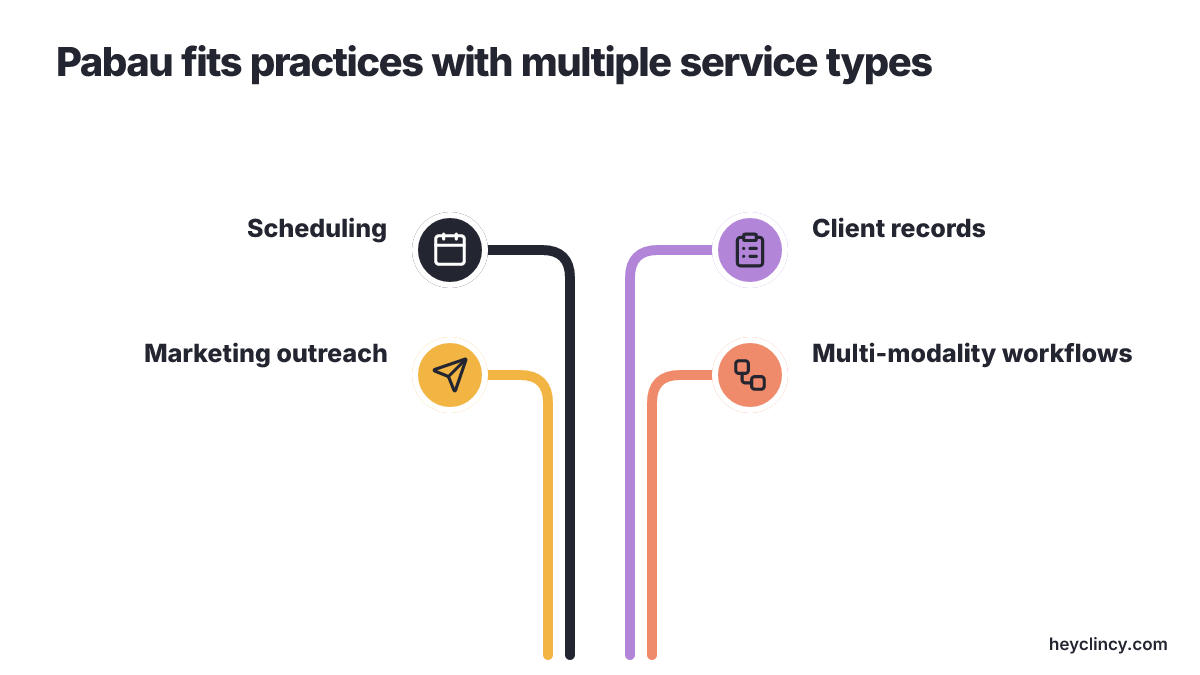
Its broad feature set helps multi-modality organizations that want scheduling, client records, and marketing outreach handled in one place. Dental offices looking at this option have to weigh that broad scope against dental-specific needs, since an all-in-one system may need extra customization to match how Open Dental manages hygiene intervals and unscheduled restorative codes.
Practices that mix traditional dentistry with cosmetic or wellness services can use the platform to keep different patient paths inside one interface. A standard dental practice that relies strictly on Open Dental should check how the platform handles overdue prophy recalls, pending crown appointments, and patient replies with tight scheduling needs before it rolls anything out.
2. DoctorConnect: best for automated recall and reactivation
DoctorConnect offers automated patient recall and reactivation built to bring back overdue patients across medical and dental settings. The system suits practices that want dedicated automation for recall intervals rather than a huge CRM suite or a phone system overhaul. Keeping the focus on recall and reactivation means the software stays centered on the operational tasks dental teams deal with every morning. Open Dental users usually start reactivation straight from hygiene recall lists, so a dedicated tool fits well with existing hygiene coordinators, insurance specialists, and front office managers.
Offices with clean recall databases and reliable contact information will find the automated outreach cadence easy to put in place. Leadership has to decide who owns patient responses before outreach starts, because unmanaged replies quickly create friction for receptionists who are already handling patients at the desk.
Teams that want focused recall automation before they spend on complex enterprise analytics should look at this platform. During demos, buyers should check how outreach results, patient replies, and completed appointments update inside Open Dental so morning huddle data stays accurate.
3. Weave: best for routing patient replies into scheduling
Weave works through two-way texting that channels incoming replies straight to the desks where people manage the book. If your clinic sends plenty of automated reminders but trips up when those text threads need to turn into confirmed chair time, this setup fits your needs.
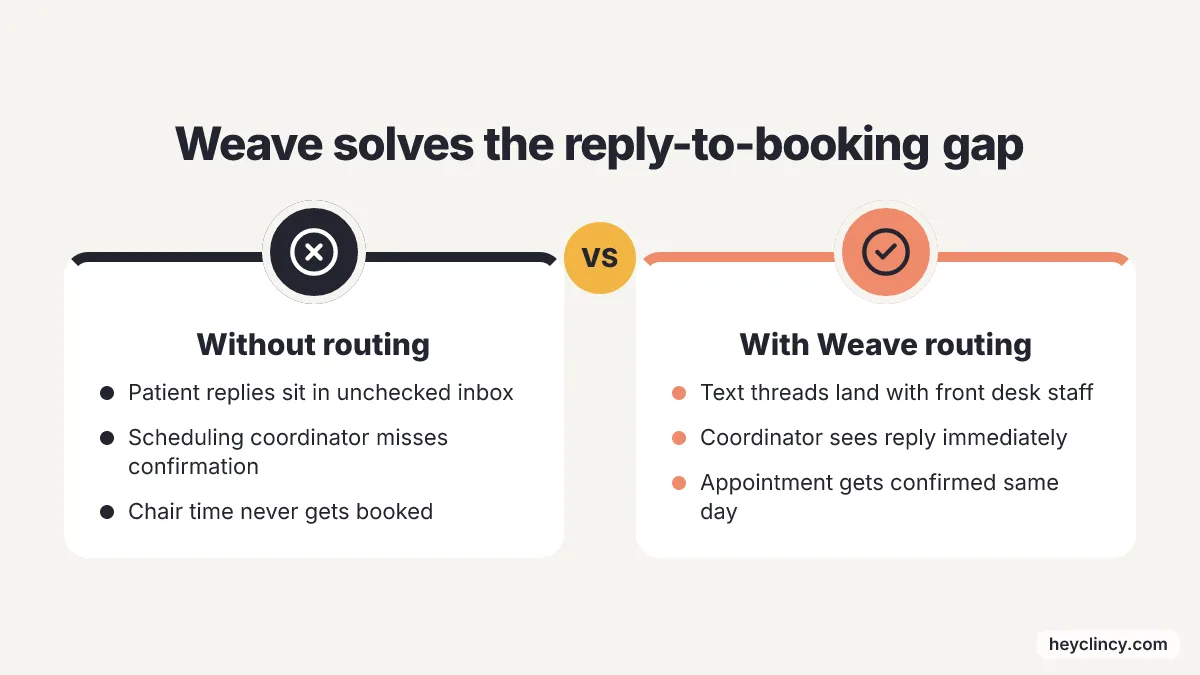
Routing stands out as the real asset here. Text threads land with the actual front desk staff, preventing the classic reactivation disaster where an overdue patient finally agrees to come in for a cleaning, only for their response to sit abandoned in an inbox nobody checks until Tuesday.
Offices wanting their patient notes paired directly with appointment coordination get an unobstructed view of their daily traffic. When evaluating how it works, administrators need to run through the awkward messages their staff see every week. Test what happens when somebody demands a specific Friday afternoon slot, writes in to ask what remains of their yearly dental deductible, or texts back insisting they reserved a chair three weeks ago.
Your scheduling coordinator still makes the actual calendar call, but the communication bottlenecks disappear. Before rolling it out, Open Dental practices should confirm that the way the system routes incoming notes and updates open calendar slots matches how the front office actually splits daily duties among specific staff members.
4. Resonate: best for AI receptionist coverage
Resonate acts as an automated receptionist. It handles incoming telephone calls, text threads, website chat boxes, and routine recall outreach. It serves practices dealing with relentless phone volume or constant turnover at the front counter.
The platform fields voice, web chat, and SMS at the exact same moment without losing track of what the patient said two minutes earlier. Offices juggling calls and online inquiries across scattered channels need unified records. Nobody likes telling a receptionist their health history and appointment preferences only to repeat the exact same details to someone else five minutes later. When front desk workers spend half their shift answering the same five routine scheduling questions instead of working down a recall list, having automated voice answers, as covered by Daily AI Brief in 2025, gives them breathing room. Practice managers need clear rules upfront about which bookings the software handles on its own and which require a live human, like complicated crown discussions, billing arguments, or upset patients.
Any automated receptionist has to follow your clinic's actual operatory availability and individual provider rules in Open Dental. Taking incoming calls does little good if the interaction merely dumps names onto a vague callback sheet, which just moves front desk backlog from a ringing phone to an unworked text list.
5. Adit: best for dental patient engagement
Adit provides a communication setup built around dental practices. It suits groups that want one system for their daily patient notes alongside their wider recall outreach.
Because the system was built for teeth rather than general medicine, it understands dental terms and daily operatory habits right out of the box. Teams looking at competing options should check whether the software separates hygiene recall, unscheduled treatment plans, regular reminders, and review requests into distinct tracks. Offices trying to get away from juggling three separate software subscriptions can bring those functions under this single platform. Running a broader tool requires clear clinic rules, though. Staff must know which outgoing alerts are simple six-month cleaning reminders, which ones chase uncompleted crown preps, and which ones need direct sign-off from a treatment coordinator.
It works well for clinics that want steady automation while keeping human control over open calendar slots. If you run Open Dental, check how the system treats routine six-month checkups compared to high-cost treatment plans before putting it into your daily schedule.
6. Dental Intelligence: best for analytics-led engagement
Dental Intelligence ties clinical data and office reporting to patient outreach, so the practice contacts people based on what the numbers say. Dental offices that want financial reports and treatment data to drive who gets a call will probably like this setup. The platform's main appeal comes from data-driven sorting, which shows leadership where production gaps sit. Practices trying to improve hygiene books and doctor production need a clear view of overdue prophy patients, unfinished treatment balances, and high-value procedures still waiting before coordinators spend hours making calls.
Practice owners and office managers who want detailed performance metrics along with outbound communication tools get a close look at daily activity, a focus discussed by Becker’s Dental Review in 2024. Clinics should judge whether staff can build the right outreach lists each morning instead of blasting messages to the whole inactive database.
The strongest results come when a named person watches the reports and turns those findings into calls and messages. Without someone assigned to that work, the treatment opportunities the system flags will stay unbooked in Open Dental.
How should an Open Dental practice choose reactivation software?
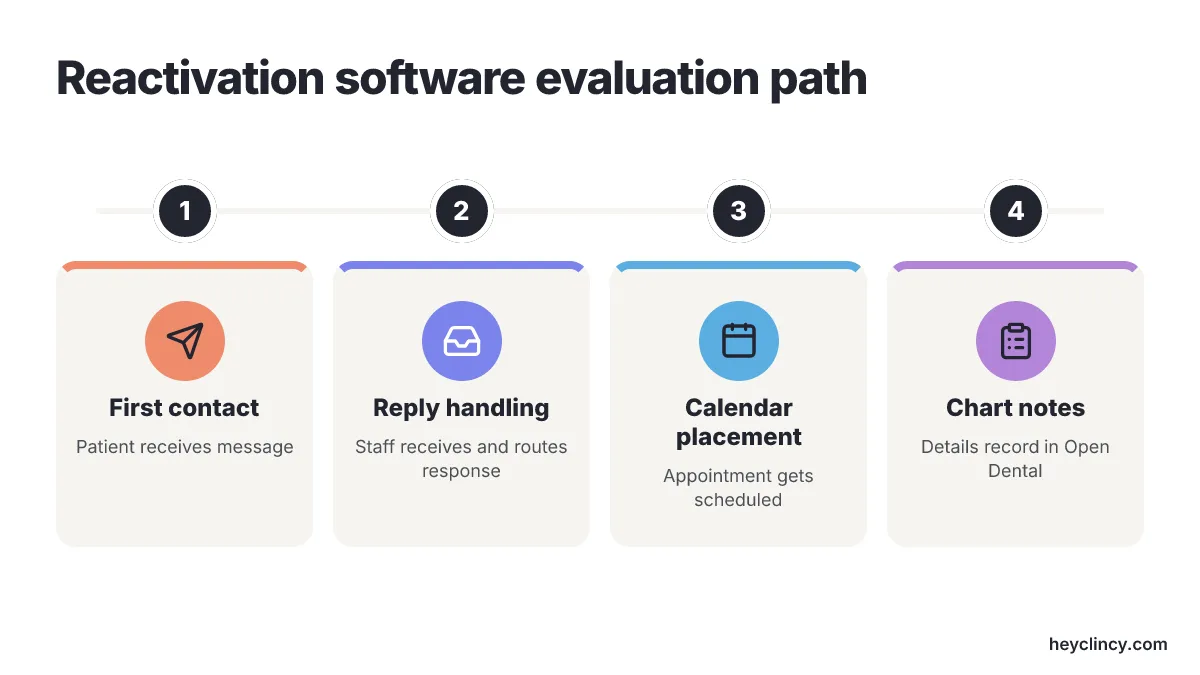
Choosing reactivation software starts with the whole path, from the first patient message to an actual visit on the schedule. A vendor demo should use real office situations, not a polished sample. Think delinquent recare lists, unscheduled restorative care, and broken hygiene appointments. Each record needs to move through first contact, reply handling, calendar placement, and chart notes. The practice also needs a clear goal before it starts comparing products. Preventive recall and restorative follow-up do different jobs. An overdue hygiene patient usually needs an open slot. A patient with crowns often needs a cost explanation, an insurance balance check, or a calmer clinical explanation. Teams that want that distinction spelled out can review recall versus reactivation before they book vendor presentations.
Reply ownership inside the office matters more than the software brochure suggests. If a patient texts back that Tuesday works, someone has to own that response right away. Stronger offices send routine hygiene requests to scheduling coordinators, direct restorative questions to treatment planners, and pass clinical questions to dental assistants or providers.
Checking Open Dental database writebacks protects records from splitting apart and cuts down on manual entry mistakes. Managers need to know which notes land in Open Dental commlogs, which details stay inside the third-party portal, and which items staff still have to reconcile by hand each day. Teams that want the checkpoints laid out before sales calls can look at the Open Dental reactivation walkthrough to see the integration standards in detail.
| Software | Supplied positioning | Best fit to test | Open Dental buying question |
|---|---|---|---|
| Pabau | All-in-one patient reactivation software for aesthetic and wellness clinics | Clinics with dental, aesthetic, or wellness workflows | Can the system reflect dental recall and treatment follow-up without forcing a generic workflow? |
| DoctorConnect | Automated patient recall and reactivation platforms | Practices focused on overdue recall and reactivation | How are replies, outcomes, and next steps recorded for staff review? |
| Weave | Two-way text communication that routes replies into scheduling updates | Teams losing patient replies between texting and scheduling | Does routing match the actual person who controls the appointment book? |
| Resonate | AI dental receptionist handling calls, texts, chats, and patient recall | Offices where reactivation competes with phone coverage | Which patient requests are handled directly, and which are handed to staff? |
| Adit | AI-powered patient communication and engagement platform for dental practices | Practices wanting broader dental communication tools | How does the platform separate recall from unscheduled treatment follow-up? |
| Dental Intelligence | Dental analytics and patient engagement platform | Offices that want reporting to guide outreach priorities | Can reports turn into assigned tasks the team will complete? |
Manual workflows still make sense when an Open Dental database has stale contact data and messy family accounts. Wrong phone numbers, old insurance profiles, duplicate records that never got merged, and missing contact preferences all point to the same fix. A staff member should clean the database first, before leadership spends money on automated outreach software. A pilot works better when it stays small and specific. Pick one patient group, one message sequence, and one staff member to own the test. Working from the native Open Dental reactivation list gives coordinators a cleaner starting sample than pulling thousands of unvetted patient files from the whole database.
Message copy needs to be drafted before any sequence goes into the software. A six-month cleaning reminder needs a different tone from a cracked molar follow-up or an overdue bridge notice. Flat wording makes patients treat the message like spam. Practices building their message library can customize these Clincy patient reactivation scripts to set clear messaging rules. Clincy builds automated outreach through AI calls and texts for dental patient reactivation and unscheduled treatment follow-up, with its engineering centered on Open Dental workflows. The software focuses on patient reactivation and treatment re-engagement for Open Dental practices. It does not try to replace the main practice management system.
Clinads serves a different job. It is built for new patient volume, not for keeping track of existing clinical records. Through specialized dental and medical clinic marketing, Clinads uses an AI marketing team that builds, watches, and refines outside advertising campaigns to bring in prospective patients and improve local search placement. Reactivation platforms stay inside the patient list already stored in the practice database.
A vendor pilot should run for a full week under normal clinic conditions. Use a small patient segment, let the front desk handle replies during regular business hours, and judge the result by seated appointments and completed Open Dental chart notes. If the tool fills chairs but leaves unworked callbacks, duplicate notifications, or untracked clinical notes behind, it has missed the clinic's core operational needs.
Conclusion
Select one manageable patient cohort in Open Dental tomorrow morning: one overdue recall interval, one designated coordinator to handle incoming replies, one tested message template, and a clear method for updating commlogs. Evaluating reactivation software becomes much simpler when vendors must demonstrate how their platforms handle that exact sequence rather than presenting broad feature overviews.
Avoid choosing a platform based purely on how many automated tools or marketing dashboards it bundles together. Success depends on whether overdue hygiene patients and diagnosed restorative procedures move reliably into confirmed calendar slots without overwhelming front desk personnel. Software can accelerate outbound contacts, but practice leaders must first establish clear guidelines for schedule placement, coordinator handoffs, chart documentation, and performance tracking before automation can produce lasting value.
Frequently Asked Questions
What is the best patient reactivation software for Open Dental practices?
The best patient reactivation software for Open Dental practices includes DoctorConnect for automated recall and reactivation, Weave for routing patient replies into scheduling, and Adit for AI-powered patient engagement. Each software offers unique features tailored to different practice needs, such as automation, communication integration, and dental-specific engagement.
How does DoctorConnect help with patient reactivation in Open Dental?
DoctorConnect offers automated patient recall and reactivation, focusing on bringing back overdue patients. It integrates with Open Dental recall lists and is designed to fit well with existing hygiene coordinators and front office managers, making it suitable for practices that prioritize recall automation over complex CRM systems.
Why is Weave considered the best for routing patient replies into scheduling?
Weave excels in routing patient replies directly to the front desk staff who manage scheduling. This prevents missed opportunities by ensuring that patient responses are promptly addressed, turning text threads into confirmed appointments without leaving replies unattended in an inbox.
What makes Adit suitable for dental patient engagement?
Adit is designed specifically for dental practices, offering a communication setup that integrates daily patient notes with recall outreach. It understands dental terms and operatory habits, allowing practices to consolidate multiple functions under one platform while maintaining human control over scheduling.
How does Resonate provide AI receptionist coverage for dental practices?
Resonate acts as an automated receptionist, handling incoming calls, text threads, and web chat simultaneously. It helps practices manage high phone volumes and front desk turnover by providing unified records and automated responses, freeing up staff to focus on more complex tasks.
Related reading
- Using the Open Dental Reactivation List Effectively
- Filling Open Dental Slots: A 2026 Patient Reactivation Guide
- Agency vs. Direct Dental Hygienist Hiring: Which Costs More?
- Top 6 Arizona Dental Clinics by Care Specialty and City
Sources
Clincy keeps treatment conversations moving with personalized texts, human support, and scheduling in your practice management system.
Book CallMore from the blog
6 Best 6 AI Vendors for Dental Treatment Reactivation
Six AI vendors for dental treatment reactivation compared on practice software integration, outreach channels and booking, plus how to trial one.
6 Best Dental Recall Services for Small Texas Practices
Compare six dental recall services on Texas fit, Open Dental questions, and reply handoffs so overdue patients become booked visits without extra queues.