AI Technologies Revolutionizing Dental Imaging by 2026
Explore AI integration in dental practices: benefits, costs, and patient satisfaction. Discover how AI can streamline operations and enhance patient care.
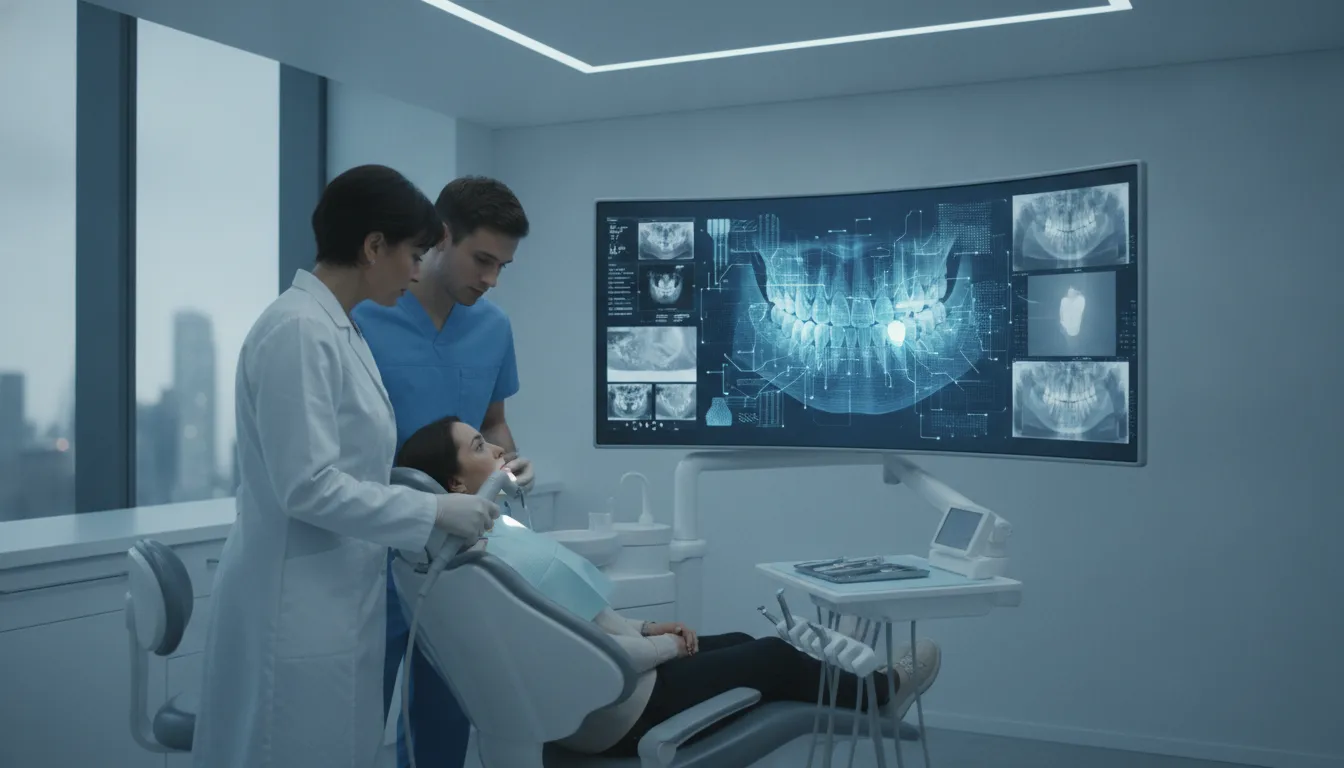
Summary: AI technologies in dental imaging for 2026 promise to automate routine tasks, enhance patient interactions, and reduce claim rejections, particularly for practices managing 900 to 1,800 active patients. While initial setup costs and patient acceptance are concerns, the potential for improved efficiency and patient satisfaction makes AI integration a valuable consideration for modern dental practices.
Many dental practices are weighing AI integration because the front office is busy and the paperwork never really stops. In offices handling 900 to 1,800 active patients, AI tools can handle intake, check insurance, and trim down claim mistakes. That part is attractive. The harder questions are cost, setup, and whether patients will accept the change. Even so, dental groups that want to keep pace with the industry have a real reason to study how AI fits into daily work.
Key Takeaways
- AI streamlines operations: AI tools can automate patient intake and insurance verification, which gives front desk staff room to handle the messier parts of the day. Our directory lists 36 Imaging clinics across 12 cities as of September 2026, and that points to how common this kind of software has become in healthcare settings.
- Cost concerns: Setup fees and monthly charges can sting at first. Over time, though, lower labor costs and fewer rejected claims may make the numbers work. River Forest Dental Studio, 2023, highlights the importance of balancing initial costs with long-term savings.
- Patient satisfaction improves: Faster intake and cleaner health history capture cut waiting around and make visits feel less clumsy. People notice that.
- HIPAA compliance is crucial: Any AI tool has to meet HIPAA standards. Vendors need to be checked carefully, since patient data is the thing you cannot afford to mishandle.
- Elderly patient acceptance: Older patients may need simpler workflows and a bit of help at the start. Training and support can smooth that out. Global Facial Aesthetics, 2023, emphasizes the need for patient-friendly AI systems.
- Error handling: AI systems need to catch exceptions cleanly. If they fail badly, the whole office feels it.
At a Glance
| Feature | Benefit | Concern |
|---|---|---|
| AI Intake Automation | Frees up front desk | Setup burden |
| Insurance Verification | Reduces claim rejections | Monthly cost |
| Patient Interaction | Improves satisfaction | Elderly patient acceptance |
How Does AI Improve Dental Practice Efficiency?
AI technologies in dental imaging and practice management can raise efficiency by taking repetitive work off staff plates. AI-powered systems can process intake, check insurance eligibility, and update health records as they come in. That means fewer data errors, faster turnaround, and less time spent on routine admin. It also helps with scheduling, since appointment slots can be arranged to cut gaps and keep the day moving. Our directory lists 36 Imaging clinics across 12 cities as of September 2026, which shows how widely this kind of tooling is being used in healthcare.
AI's impact on efficiency extends to diagnostic accuracy and treatment planning. Advanced imaging technologies powered by AI can analyze dental scans with precision, identifying issues that might be missed by the human eye. This level of accuracy not only enhances patient care but also streamlines the workflow by reducing the need for repeat scans and consultations. AI's ability to learn and adapt means that it can continuously improve its diagnostic capabilities, further enhancing practice efficiency over time.
What Are the Cost Implications of AI Integration?
AI integration can feel expensive at the start. It often is. Software, training, and setup all cost money, but those costs may be balanced by lower labor expenses and fewer claim denials later on. Practices should look at their own budget and workflow before choosing anything. Some vendors also offer tiered plans, so a practice can begin with basic functions and add more later. Financing options or grants may help too, if they’re available for healthcare technology adoption.
In addition to initial costs, practices should consider ongoing expenses such as software updates, maintenance, and potential upgrades. While these costs can add up, the long-term benefits often outweigh them. AI systems can lead to increased patient throughput, reduced administrative burden, and enhanced patient satisfaction, all of which contribute to a more profitable practice. Practices should conduct a thorough cost-benefit analysis to determine the best AI solution for their needs.
How Does AI Improve Patient Satisfaction?
AI can make a dental visit feel less like a bottleneck. Check-in moves faster, so people spend less time staring at the waiting room clock, and the front desk gets cleaner data from the start. Health histories are captured with fewer slips, which matters more than it sounds, because a wrong note in the chart can ripple through the whole visit. Practices using AI often see happier patients and better return visits. Reminders land on time. Follow-up instructions do too.
Trust grows when patients get timely answers and accurate records. That part is hard to fake. AI can also enhance patient engagement by providing personalized communication. Automated appointment reminders, post-visit follow-ups, and tailored health tips can be sent directly to patients, keeping them informed and engaged in their oral health. This proactive approach not only improves patient satisfaction but also encourages adherence to treatment plans and regular check-ups.
Keeping AI Tools HIPAA-Compliant
HIPAA still sits in the middle of the conversation. AI systems in a dental office have to protect patient data and keep it confidential, full stop.
That means vendors matter. Practices need vendors who know the rules and can show they do. Audits help. Staff training helps too. Encryption and access controls should be in place, because patient information should not be sitting around like loose change on a counter. Practices also need to keep up with HIPAA changes and update their systems when the rules shift.
Regularly reviewing and updating data protection protocols is essential to maintaining compliance. Practices should conduct periodic audits to ensure that all AI systems are operating within HIPAA guidelines. Staff should receive ongoing training to stay informed about the latest regulations and best practices for data security. By prioritizing HIPAA compliance, practices can protect patient information and build trust with their patients.
Helping Elderly Patients Adjust
Older patients may need a slower introduction to AI tools. Clear instructions go a long way. So does having someone nearby during the first few interactions.
The tools themselves should be easy to use. If a system confuses younger patients, it will frustrate older ones even faster. Training sessions and live demonstrations can make the whole thing feel less strange. Family members or caregivers can also step in and give reassurance when needed.
Practices can also consider offering dedicated support for elderly patients, such as a helpline or in-person assistance. This additional support can help alleviate any concerns or confusion that may arise during the transition to AI-based systems. By addressing the unique needs of elderly patients, practices can ensure a smooth and positive experience for all patients.
Choosing the Right AI Tools for Your Practice
Picking AI tools for a dental practice starts with a blunt question, where will this actually help?
Some offices need help with intake. Others care more about insurance checks or data handling. Cost matters. So does vendor support. Ease of use matters too, because nobody wants a shiny system that slows the morning down.
Integration is a big test. The tool should fit with the software and workflow already in place. Support and training should come with it, not as a vague promise buried in a sales pitch. Talking with other practices that have already adopted AI can also be useful, since they can tell you what worked and what turned into a headache.
Evaluating the scalability of AI tools is also important. As a practice grows, its needs may change, and the chosen AI solution should be able to adapt accordingly. Practices should look for vendors that offer flexible solutions and ongoing support to ensure a successful long-term partnership. By carefully considering these factors, practices can select AI tools that enhance their operations and improve patient care.
Conclusion
AI can help dental practices run better and keep patients happier. It can also create problems if cost, compliance, and patient comfort are ignored. Those details are the price of admission.
Handled well, AI supports better care and smoother office work. Handled carelessly, it becomes one more thing to fix.
Frequently Asked Questions
How can AI reduce claim rejections in dental practices?
AI can handle insurance checks before a claim goes out. It catches missing fields, mismatched codes, and other small mistakes that often sink a submission on the first pass. It also flags common claim errors and suggests fixes, so the office spends less time chasing denials.
What are the initial costs associated with AI integration?
There’s no way around the upfront bill. Software costs money, staff need training, and older systems may need upgrades to talk to the new tools. Still, many practices recoup part of that through lower labor costs and less wasted time. Better patient retention can help too, since happier patients tend to come back.
How do AI tools ensure HIPAA compliance?
Dental AI tools need to follow strict data protection rules. Vendors should be able to show how they handle compliance, and the practice should check that regularly. Encryption matters here. So do access controls, because patient records should not be sitting around for anyone to open.
What steps can practices take to help elderly patients adapt to AI technologies?
Start with plain help and clear instructions. Elderly patients usually do better when the process is explained slowly, and when the tool itself is easy to use. A demo can help. So can a caregiver sitting in during the first few tries.
Are there any free resources available for AI integration in dental practices?
Yes. Practices can use our New Patient Intake Form Template and Insurance Verification Script to get started and tighten up their workflow. They give teams a base for bringing AI into daily work without guessing their way through every step.
Recommended resource
Related reading
- Challenges in Insurance Verification for Dental Practices
- Utilizing Third-Party Services for Dental Insurance Claims
- Investor Due Diligence Questions for Clinical AI Startups
- Navigating Ethical Challenges in Clinic Operations
Sources
- Clinads (healthcare startup)
- Global Facial Aesthetics: Comprehensive Dental & Facial Care in ... (clinic)
- River Forest Dental Studio - Dentist River Forest, IL (clinic)
Tools you can use
Where to go next
Clincy completes new-patient intake by voice or SMS before the visit, then writes it back to your PMS.
Book CallMore from the blog
Filling Open Dental Slots: A 2026 Patient Reactivation Guide
Manage overdue patients and fill appointment slots efficiently with our 2026 guide for Open Dental, focusing on TCPA compliance, AI automation, and workflows.
Dental Patient Reactivation Process: 2026 Practice Guide
Discover the 2026 patient reactivation strategy. Boost hygiene bookings, manage unscheduled treatments, and ensure HIPAA compliance with this expert guide.