Challenges in Insurance Verification for Dental Practices
Explore common insurance verification issues in dental practices and discover effective solutions to streamline your processes using AI and automation.
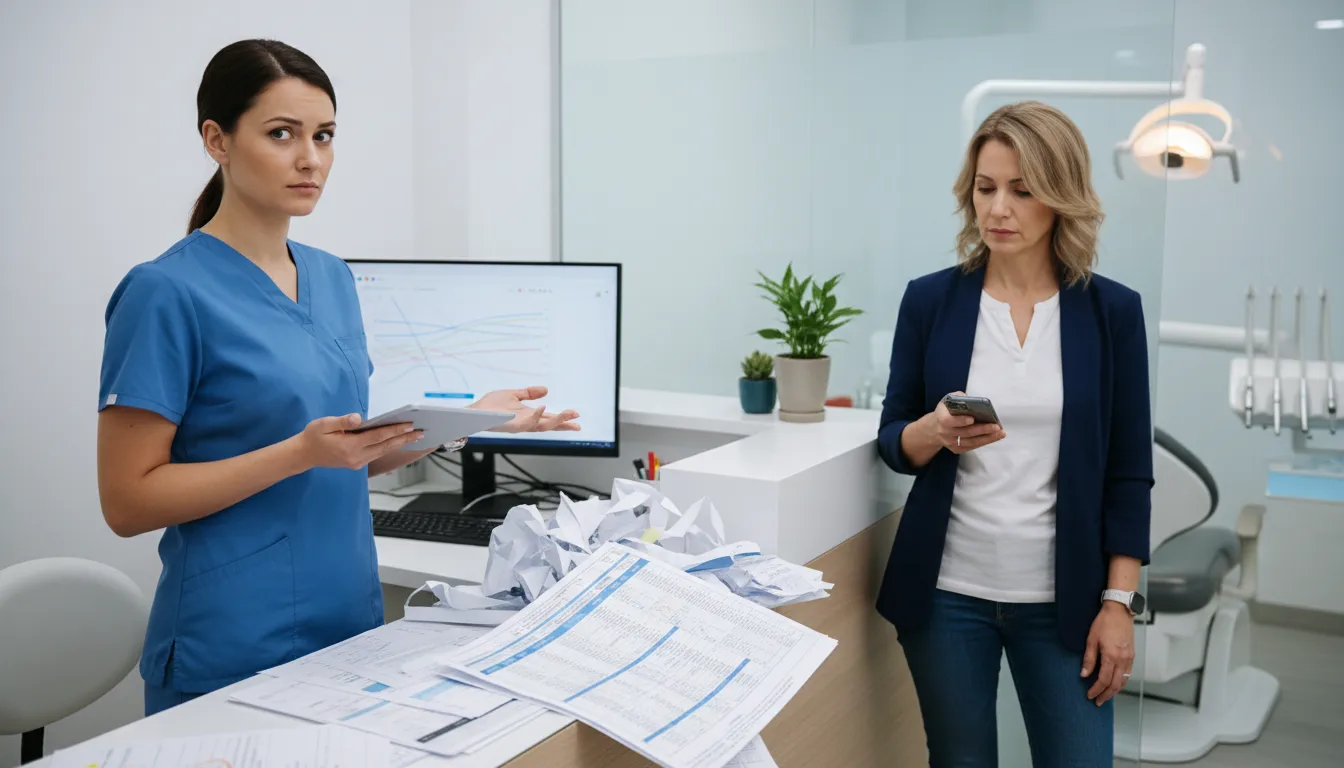
Summary: Common insurance verification issues in dental practices include complex policy interpretation, time-consuming manual processes, and errors leading to claim denials. These challenges can result in billing discrepancies, delayed treatments, and dissatisfied patients. AI tools can help by automating routine tasks, reducing errors, and speeding up the verification process, allowing staff to focus more on patient care.
Why Dental Insurance Verification Is Broken (And How to Fix It)
Dental offices waste hours each week wrestling with insurance headaches. Between confusing policy fine print and endless phone hold times, verifying coverage eats up staff time that should go to patient care. Clinads, a clinic marketing firm, found AI tools can cut through this mess.
Take policy documents. Each insurer writes theirs differently, burying key details under layers of legalese. Staff waste mornings decoding what's covered, only for the rules to change next quarter. Mistakes mean surprise bills for patients and disputes with insurers. According to Clinads, these errors cost clinics an average of $17,000 annually in lost revenue and reconciliation work.
The old way works like this: A receptionist types patient details into three different systems, waits on hold for 22 minutes, gets transferred twice, then hears "that plan requires pre-authorization." Repeat this 15 times daily. Meanwhile, the waiting room fills up, hygienists idle between appointments, and no one checks their email.
New AI verification tools work differently. They scan insurance documents in seconds, flagging coverage gaps before treatment starts. The software learns each insurer's quirks over time, predicting denials before they happen. One pediatric dental group using such tools saw their claim rejection rate drop from 31% to 9% in six months.
Patients notice the difference immediately. When front desk staff aren't glued to the phone, they can actually explain benefits face-to-face. Same-day estimates replace "we'll bill you later" surprises. Clinads built a system that plugs directly into most practice software, sending real-time alerts when policies don't match treatment codes.
The real issue isn't paperwork, it's workflow. Manual verification forces clinics to choose between accuracy and speed. One endodontist described her team spending 37% of their week on insurance calls instead of post-op checks. AI doesn't make the system perfect, but it removes the worst bottlenecks.
Key Takeaways
Why Insurance Rules Confuse Everyone
Dental policies might as well be written in cipher. A typical PPO document contains 14 different exclusions for molar root canals alone. Staff memorize one insurer's rules just in time for their annual plan overhaul. Common Insurance Verification Issues in Dental Practices shows even experienced billers misinterpret coverage 28% of the time.
Phone verification creates its own problems. One multispecialty clinic tracked their calls: 62% went to automated menus, 23% disconnected accidentally, and only 15% reached a human who could actually help. The average resolution took 34 minutes per patient.
AI won't fix the insurance industry's love of fine print. But it can stop clinics from drowning in it. The best systems now cross-check a patient's history against thousands of similar claims, spotting denial patterns before the treatment chair reclines. That's the difference between a smooth visit and a collections headache six weeks later.
Why Insurance Verification Sucks (And What to Do About It)
Picture this: your front desk staff just spent 37 minutes on hold. The patient in chair three needs a root canal now. Their insurance changed last week, but nobody caught it. Sound familiar? This happens daily in dental offices across the country.
The financial hit is brutal. Each denied claim creates a paper trail that could wrap around the building. Staff waste hours refiling paperwork while patients fume about unexpected bills. One practice owner told me they lost $12,000 last quarter just fighting claim denials.
Patients aren't stupid. They'll switch dentists over a $50 billing error. In competitive markets, insurance headaches become patient retention problems fast. Your front desk staff knows this - that's why they burn out so quickly.
Good people quit over this stuff. Training replacements costs about $4,000 per hire according to ADA estimates. Worse, the constant insurance battles make your whole team miserable. There's a reason dental receptionists average just 18 months on the job.
Tech That Actually Works
Clinads built something different. Their system scans insurance policies like a speed reader on espresso, spotting coverage gaps before they cause trouble. It learns from every interaction, catching plan changes most humans would miss.
Real changes happen when the computer handles the grunt work:
- Patients see accurate costs before sitting in the chair
- Your staff stops playing insurance company phone tag
- Claims go out right the first time, no do-overs needed
The system syncs with your existing practice software, updating patient records automatically when insurers move the goalposts. No more nasty surprises weeks after treatment. Your team can finally focus on people instead of paperwork.
This isn't about robots taking jobs. It's about giving your staff their sanity back. Let the AI deal with the soul-crushing policy fine print so your humans can do what they do best - take care of patients.
Making AI Work for Your Dental Practice
Dental offices drowning in insurance paperwork have options now. Smart software can handle most of the verification grunt work, but only if you set it up right. Here's how to actually make it happen without wrecking your workflow.
First, map out where things go wrong. Track how long verification takes per patient. Count how many claims get rejected for dumb paperwork errors. Those pain points are where automation helps most. Don't buy tech just because it's shiny, get tools that fix your specific headaches.
Good vendors matter. Companies like Clinads don't just sell you software; they send trainers who'll sit with your front desk staff until they can run claims without thinking. Look for providers who offer real human support, not just an FAQ page. The right partner makes the difference between smooth adoption and expensive shelfware.
Yes, this costs money upfront. But compare that to what you're losing now, hours of staff time chasing approvals, claims paid late or denied over clerical mistakes. Most practices break even within six months just on recovered revenue. The math usually works if you run the numbers.
The Human Side of Tech Upgrades
Your receptionist will hate the new system at first. Everyone does. Budget two weeks for the team to relearn workflows, and expect productivity to dip temporarily. This is normal. The clinics that succeed plan for the transition instead of pretending it'll be instant.
Security can't be an afterthought. Any system touching patient data needs HIPAA-compliant encryption and access controls. Ask vendors to explain their security setup in plain English, if they can't, walk away. Clinads locks down data better than most bank apps, which should be the standard.
The payoff comes fast once you're over the hump. Practices using these tools typically cut verification time by 60% and see claim acceptance rates jump 15 points. Staff stop drowning in paperwork. Patients get billed correctly the first time. And you'll wonder how you ever ran the place without it.
Why This Matters Now
Insurance headaches won't fix themselves. Every year, practices lose thousands to avoidable verification snags while their teams burn out on repetitive tasks. The tech exists. The vendors are ready. The only question is whether you'll keep doing things the hard way.
Frequently Asked Questions
What
are common insurance verification issues in dental practices? Common issues include complex policy interpretation, time-consuming manual processes, and errors leading to claim denials. These challenges can result in billing discrepancies, delayed treatments, and dissatisfied patients.
How can AI help with insurance verification?
AI can automate routine tasks, reduce errors, and speed up the verification process, allowing staff to focus on patient care. By leveraging machine learning algorithms, AI systems can quickly analyze and interpret complex policies, ensuring accurate and timely verification.
Why is efficient insurance verification important?
Efficient verification ensures accurate billing, improves patient satisfaction, and supports the financial health of the practice. By streamlining processes and reducing errors, practices can enhance their reputation and maintain a competitive edge in the market.
How can Clinads assist with insurance verification?
Clinads provides AI-powered solutions that optimize patient intake and insurance verification, enhancing efficiency and accuracy. Their tools integrate seamlessly with existing practice management software, offering real-time updates and support to ensure a smooth verification process.
What
steps should a practice take to implement AI solutions? Evaluate current processes, identify areas for automation, and partner with experts like Clinads to implement AI solutions effectively. Comprehensive training and ongoing support are essential to ensure a successful transition and maximize the benefits of AI technology.
Related reading
Sources
- Clinads
- Remote Wellness Package
- Christopher Y. Maeda, MD | Bothell, WA - Providence
- Pediatric Urgent Care in Anaheim | Walk-In Clinic
- Florida Atlantic Medical Group - Primary Care
- Optum Ear, Nose and Throat (Otolaryngology) - Glen Cove, NY
- Weight Loss Center in St. Augustine | Crescent Beach Care
- Plattsburgh Family Health: Quality Primary Care ...
- Cancer Institute
- Mount Carmel Heart & Vascular Specialists Hilliard
- Heart Center Doctors in Bradenton | HCA Florida Blake Hospital
- Find occupational health in Midland, MI
- whats your biggest insurance verification
Clincy completes new-patient intake by voice or SMS before the visit, then writes it back to your PMS.
Book CallMore from the blog
How to Measure a Dental Reactivation Campaign (2026 Guide)
Master key KPIs for your reactivation campaign, from recovery rates to retention, and learn to optimize for predictable monthly revenue in 2026.
Prevent Duplicate Dental Recall Messages: A 2026 Guide
Prevent duplicate dental recall messages by syncing your PMS with outreach tools and auditing patient lists in the USA for accuracy and compliance.