Selecting Practice Management Software for Small Dental Offices
Considering new dental practice management software? Learn how to evaluate vendors, integrate AI automation, and improve patient retention in 2026.
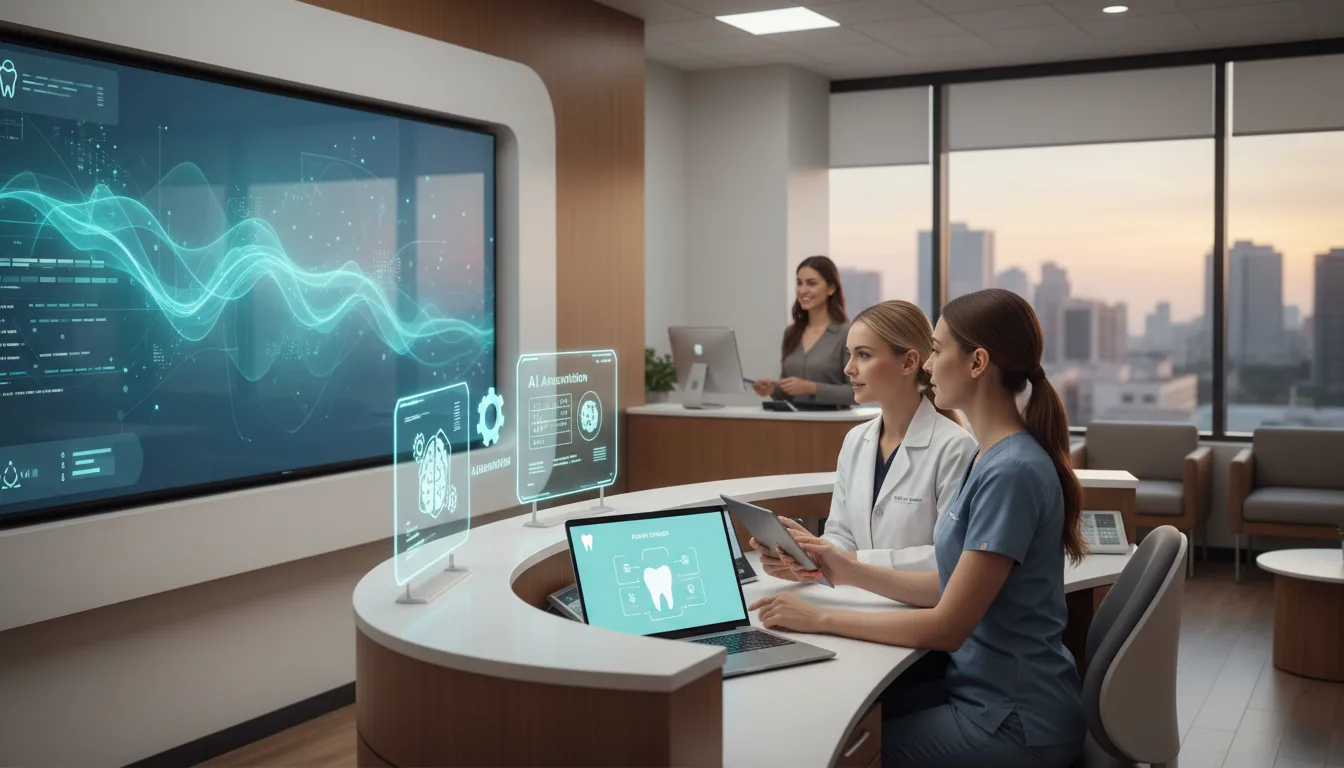
Summary: Choosing dental practice management software for small offices is crucial for reducing clerical errors and improving workflow efficiency. Modern solutions prevent errors upfront, with AI tools flagging insurance mismatches and automated texts confirming coverage. Cloud-based systems offer flexibility and reduce IT burdens, while automation cuts no-show rates and enhances patient retention. Investing in robust software can streamline operations and boost revenue.
Why Dental Offices Keep Losing Money on Paperwork
One in every 72.88% dental claims gets denied because of clerical errors. That's not just a billing problem, it's hours wasted re-faxing forms, staff quitting over insurance verification drudgery, and patients walking out when their coverage details are wrong. Most small practices don't realize how much revenue leaks through these cracks until they see the numbers.
The front desk shouldn't be a claims processing factory. When your receptionist spends half their day playing phone tag with insurers, patient care suffers and new appointments stall. Choosing dental practice management software isn't about buying fancy tech, it's about fixing the broken workflow that's costing you money right now.
Modern solutions tackle this differently. Instead of just digitizing forms, they prevent errors upfront. AI tools now flag insurance mismatches before appointments. Automated texts confirm coverage details directly with patients. Open Dental users report cutting claim denials by 40% after adding these features. The goal isn't paperwork perfection, but getting 24 and 7 patients through the door without administrative chaos.
Key Takeaways
Administrative Errors Drive Denials
Administrative deficiencies account for 72.88% of claim denials, highlighting that documentation quality and insurance accuracy are revenue problems, not just back-office issues. This statistic underscores the critical nature of administrative efficiency in dental practices. When claims are denied due to administrative errors, it often results in a cascade of negative effects. Staff members must spend additional hours correcting and resubmitting claims, which diverts their attention from patient care and other essential tasks. Moreover, these errors can lead to delayed payments, affecting the practice's cash flow and financial stability. The root of these issues typically lies in inadequate processes rather than a lack of effort or competence among staff. Therefore, it is imperative for dental practices to invest in robust practice management software that can streamline administrative tasks, reduce errors, and ensure that claims are submitted accurately and promptly. By doing so, practices can significantly reduce the percentage of denied claims and improve their overall revenue cycle management.
Cloud is the New Standard
Interest in cloud-based dental practice management software has surged, with search volume increasing over 1,200% year-over-year as practices move away from server maintenance. This shift is driven by the numerous advantages that cloud-based systems offer over traditional server-based solutions. Cloud systems eliminate the need for costly and time-consuming server maintenance, allowing practices to focus on patient care rather than IT issues. Additionally, cloud-based software provides greater flexibility and accessibility, enabling staff to access patient records and practice management tools from any location with an internet connection. This is particularly beneficial for practices with multiple locations or those that offer remote consultations. Furthermore, cloud systems often come with automatic updates and security features, ensuring that the practice is always using the latest technology and is protected against data breaches. As the dental industry continues to evolve, adopting cloud-based practice management software is becoming a necessity for practices that want to remain competitive and efficient.
Automation Boosts Retention
Automated two-way confirmation and recall systems can cut no-show rates by 40-60% within three months, transforming your schedule stability. No-shows are a significant challenge for dental practices, leading to lost revenue and wasted time. By implementing automated confirmation and recall systems, practices can significantly reduce the number of missed appointments. These systems send reminders to patients via SMS, email, or phone call, allowing them to confirm or reschedule their appointments with ease. This not only improves patient attendance but also enhances the patient experience by providing convenient and flexible communication options. Moreover, automation frees up staff time, allowing them to focus on more complex tasks and patient interactions. The reduction in no-shows leads to a more stable and predictable schedule, which is crucial for optimizing practice efficiency and revenue. As a result, investing in automation technology is a smart move for practices looking to improve patient retention and overall operational performance.
Retention Outweighs Acquisition
It is 5–7 times more expensive to acquire a new patient than to retain an existing one, yet most practices still over-allocate budgets to acquisition rather than automated reactivation. This common oversight can lead to inefficient use of resources and missed opportunities for growth. Retaining existing patients is not only more cost-effective but also more beneficial in the long run, as loyal patients are more likely to refer others and accept recommended treatments. To improve patient retention, practices should focus on enhancing the patient experience through personalized communication, consistent follow-ups, and high-quality care. Automated reactivation systems can play a crucial role in this process by identifying lapsed patients and reaching out to them with targeted messages and offers. By reallocating resources from acquisition to retention, practices can build a loyal patient base, increase patient lifetime value, and ultimately achieve more sustainable growth.
Efficiency Through AI
AI voice agents can handle up to 61% of inbound calls and push after-hours answer rates from 0% to approximately 92%, freeing your team to focus on complex patient interactions. The integration of AI technology into dental practice management is revolutionizing the way practices operate. AI voice agents are capable of handling routine inquiries such as appointment scheduling, insurance verification, and basic patient questions. This reduces the workload on front-desk staff and ensures that patients receive prompt and accurate information. Additionally, AI agents can operate 24/7, providing after-hours support and increasing patient accessibility. This is particularly beneficial for practices that want to offer flexible scheduling options and cater to patients with busy lifestyles. By leveraging AI technology, practices can improve operational efficiency, enhance patient satisfaction, and allow staff to dedicate more time to complex and high-value tasks that require human interaction.
Why Software Upgrades Backfire for Small Dental Offices
Think new software will solve everything? Think again. Most small dental offices discover the same old problems just show up in a fancier interface. Insurance verification still stinks. Recall lists keep collecting dust. Before you sign any contract, figure out what's actually broken.
When choosing dental practice management software, ask yourself: is the software really the problem, or is it your team's handling of challenges in insurance verification for dental practices? Sometimes clearer protocols work better than switching systems.
Data migration looks easy on paper. Clinical notes vanish. Perio charts get scrambled. Custom forms break. And that's just the beginning. A typical six-person office can lose 15 full workdays during the transition. Clean your data first. Train your team properly. Understand that new software means new workflows. There's no way around it.
Cloud vs. Server: What Actually Matters
For most small practices, cloud is the way to go. Forget server rooms and midnight backup checks. But remember, internet-dependent systems go down hard when the connection fails. Rural offices or those with heavy imaging needs might still require local servers.
Nobody mentions the real issue: who handles your tech disasters? Without an IT person on speed dial, cloud vendors do the heavy lifting. Offices running 1-10 locations love the visibility of one dashboard. Just make sure you can actually get your data out later. Demand proof that you can export patient records and communication logs in a usable format, not proprietary nonsense.
How AI Actually Helps Front Desks
Your receptionist isn't lazy. They're swamped with routine calls about bookings and insurance questions. Modern AI for dental practices takes over the boring 60%, freeing your team for actual patient care. This isn't about replacing humans. It's about letting them handle complex cases and nervous patients instead of playing phone tag.
Open Dental users have it easy, these tools plug right in. The real win comes from automating recall lists. An AI can pester overdue patients at 2 AM without overtime pay. Add text confirmations, and watch no-shows drop. Patients reschedule with two taps instead of a phone call, and actually show up. That's serious money saved.
The Role of Automated Patient Intake and Recall
Patient intake is a major administrative drain, often consuming 30-70% of staff time. Manual data entry for new patients (collecting medical history, insurance verification, and signatures) is error-prone and slow. Automated digital intake forms, triggered by your PMS, allow patients to complete their documentation before walking through the door. This simple shift shaves 15-20 minutes off every new patient appointment, creating a better first impression and keeping your schedule on track. Beyond intake, the recall engine is your most underused growth lever. The industry-standard recall effectiveness is roughly 45%. By deploying an automated sequence that combines voice, SMS, and email, you can significantly increase reactivation rates. Solutions like Clinads are excellent starting points for practices looking to improve their medical practice's local search rankings, which complements your internal recall efforts by driving new patient volume. Remember, it is far cheaper to reactivate a lapsed patient than to acquire a new one. A proactive recall program is a powerful competitive moat that protects your revenue and enhances your patient retention.
Selecting the Right Partner for Your Tech Stack
When comparing potential software vendors, do not fall for the "demo trap" where you prioritize flashy UI over functional reality. Use a five-filter framework: integration depth, workflow fit, total cost of ownership, vendor support, and data portability. If a tool fails on integration, for example, if it doesn't bridge perfectly with your specific digital X-ray sensors or CBCT unit, the other features are irrelevant. Consider the total cost of ownership, which includes subscription fees, but also implementation costs, data migration, staff training hours, and the inevitable productivity dip during the transition. Read your contracts carefully. Avoid auto-renewal clauses buried in the fine print and look for short, manageable contract terms for first-time purchases. If you are looking to scale or simply optimize your current footprint, ensure that your chosen PMS supports the tools you need today, as well as the ones you anticipate needing in two years. Integration with third-party tools should be seamless, not a complex web of manual workarounds that require constant attention from your office manager.
Building a Sustainable Growth Model
The ultimate goal of upgrading your practice management software is to support a business model where you spend less time on administration and more on patient care. High-performing practices (the top 10%) often see drastically different metrics than the average, with patient retention rates around 94% and no-show rates below 1%. They achieve this by simplifying the patient journey from the moment of booking to the final billing statement. For your practice, this means viewing every digital touchpoint as an opportunity to reduce friction. Whether it is online booking, automated insurance verification, or educational content sent after a treatment plan presentation, every automated step should feel cohesive. As you refine your processes, remember that marketing and retention must be balanced. Practices that focus solely on attracting new patients to private dental practices while letting their existing patient base churn are working against themselves. By investing in the right software and automation, you turn your front desk into a high-efficiency engine that sustains long-term growth and profitability.
Conclusion
Upgrading your dental practice management software is a high-stakes operational pivot, not just a technical change. By auditing your current administrative processes and prioritizing integration, data portability, and workflow fit, you can make an informed decision that scales with your practice. Whether you are maximizing the capabilities of Open Dental or exploring new integrations, the key is to automate the repetitive tasks that cost you time and revenue. Incorporating AI voice agents and robust SMS communication into your workflow allows you to lower no-show rates, increase recall effectiveness, and improve the patient experience. Ultimately, the most successful practices are those that view their software as a foundation for efficiency, enabling their team to focus on the human interactions that truly drive patient loyalty and case acceptance.
Frequently Asked Questions
What should
I prioritize when choosing dental practice management software?
Prioritize integration depth and workflow fit above all else. Before evaluating UI or features, confirm the software integrates with your specific imaging equipment and practice goals. Ensure the vendor offers clear data portability, meaning you can export your records if you leave. Finally, calculate the total cost of ownership, including migration and training, rather than focusing solely on the monthly subscription price.
Are
AI voice agents actually effective for small dental offices?
Yes, they are highly effective for handling routine tasks like scheduling, insurance inquiries, and recall outreach. In many cases, AI agents manage up to 60-90% of inbound calls, significantly improving after-hours responsiveness. They do not replace your staff; instead, they clear the routine workload, allowing your team to focus on complex patient needs, clinical support, and in-person patient interactions.
How do
I minimize the productivity dip during a software transition?
The productivity dip is inevitable, so budget for it. Plan for 4–6 weeks of reduced capacity and intensive training. Before switching, clean your existing data to ensure you aren't migrating bad records. Conduct thorough staff training on the new workflows before the go-live date, and consider a phased rollout if your practice has multiple locations or complex imaging requirements.
Why
does my no-show rate matter for software selection?
No-show rates are a primary indicator of administrative efficiency. Systems that offer automated, multi-channel confirmation (SMS, email, and voice) and easy, two-tap rescheduling can reduce no-shows by 40-60%. If your potential software does not have strong, automated confirmation sequences that integrate directly with your scheduler, you are missing an easy opportunity to protect your revenue and stabilize your hygiene and doctor columns.
Related reading
- Attracting New Patients to Private Dental Practices
- Challenges in Insurance Verification for Dental Practices
- How Clinical Pain Point Documentation Transforms Patient Care and Practice Efficiency
- How To Improve Your Medical Practice's Local Search Rankings
Sources
- Rebrief › Choosing Dental Practice Management Software in 2026: A Buyer’s Frame
- Dental Practice Marketing Statistics (2026): Budgets, Patient Acquisition Cost & What Actually Works
- How to Evaluate Dental Software Before You Buy (2026) | Dentalbase
- Best Dental Practice Management Software 2026 | Complete PMS Guide
- Dental Practice Management Software: Vendor-Neutral Guide | PracticeAlpha
- Dental Practice Management Software: An Honest Guide (2026), LinkTech Solutions
- AI Voice Agent for Dental Clinics: A 6-Week Case Study
- The Dental Practice AI Stack | Nirvani Industry Playbook
- 24/7 AI Dental Receptionist: Complete Guide for Practices | DentalBase
- AI for Dental Practices: Scheduling, Reminders & Patient Intake | SuperDupr
- AI for Dental Practices: Automate Scheduling, Recalls & Patient Communication | ConvoCore
- 2026 Dental Practice Benchmarking Report | Catalyst Index by Henry Schein One | Henry Schein One
- Dental Practice Marketing in 2026: What 448 Practices Say
- Dentists Industry Marketing Benchmarks 2026
- The Independent Dental Practice in 2026 | Opkie Research
- Optum Ear, Nose and Throat (Otolaryngology) - Glen Cove, NY
- Weight Loss Center in St. Augustine | Crescent Beach Care
- Plattsburgh Family Health: Quality Primary Care...
- Pediatric Urgent Care in Anaheim | Walk-In Clinic
- Florida Atlantic Medical Group - Primary Care
- Cancer Institute
- Mount Carmel Heart & Vascular Specialists Hilliard
- Christopher Y. Maeda, MD | Bothell, WA - Providence
- Heart Center Doctors in Bradenton | HCA Florida Blake Hospital
- Find occupational health in Midland, MI
- Practice management software for very small office (4 employees)
Clincy completes new-patient intake by voice or SMS before the visit, then writes it back to your PMS.
Book CallMore from the blog
Attracting New Patients to Private Dental Practices
Discover effective strategies for attracting new patients to your dental practice using AI-powered marketing and automation tools.
Challenges in Insurance Verification for Dental Practices
Explore common insurance verification issues in dental practices and discover effective solutions to streamline your processes using AI and automation.