Effective Staffing Solutions for Dental Practices
Explore effective staffing solutions for dental practices to enhance patient intake and operational efficiency.
Updated
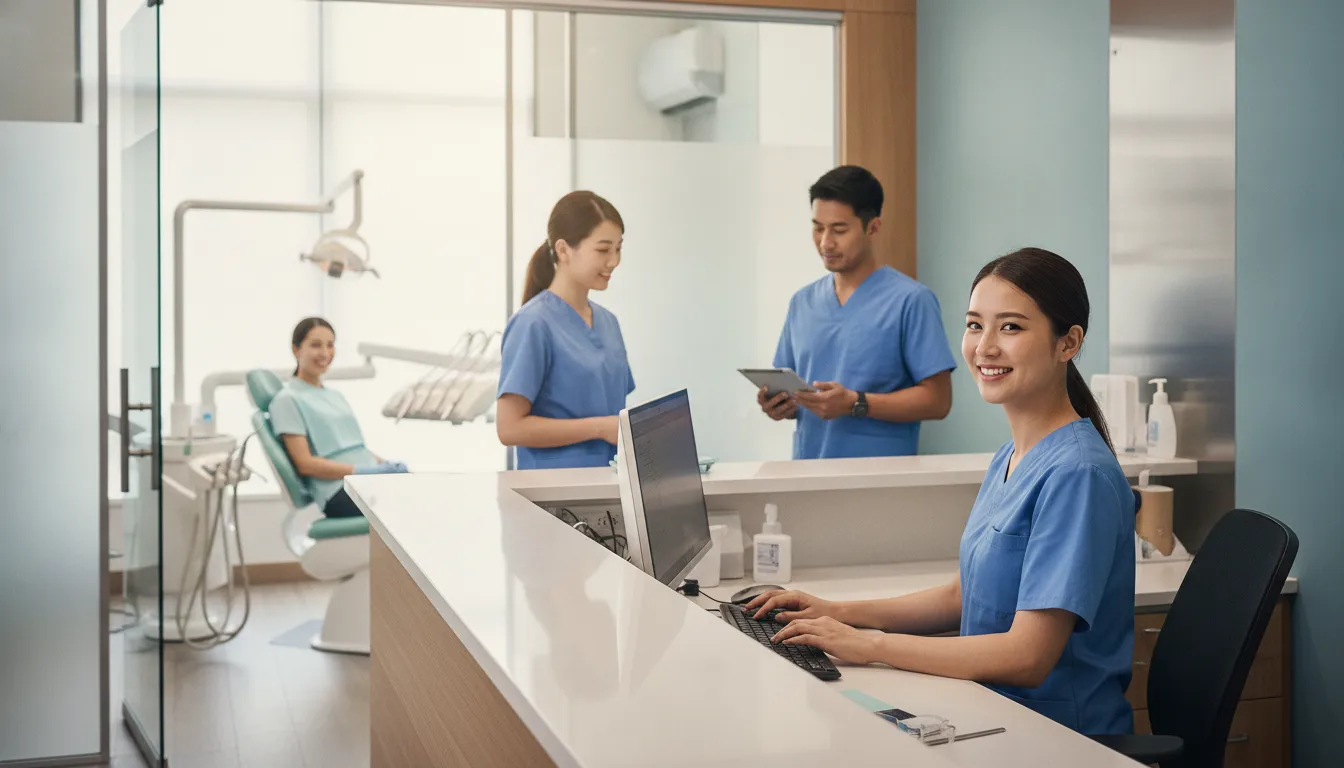
Summary: Dental practices can enhance staffing by integrating modern automation, utilizing flexible labor options, and investing in ongoing training. Automation reduces front desk workload, while flexible staffing allows practices to adjust to patient volume changes without incurring unnecessary costs. Training and development improve staff retention and efficiency. Outsourcing non-core tasks and adopting integrated dental software further streamline operations, allowing staff to focus more on patient care.
Effective Staffing Solutions for Dental Practices
Today, about 70% of dental practices say talent hiring and retention are their biggest operational headache. For independent clinics and mid-sized offices, that tracks. Front-desk coverage, insurance checks, and incoming patient calls can chew through a team fast.
Finding dependable staffing solutions for dental offices is no longer a side task. It sits at the center of steady patient volume, reliable cash flow, and strong clinical standards.
When the front desk is short-handed, or people keep leaving, the whole day slows down. Hygienists and practice managers get dragged into phones, benefits, and schedule fixes. Patients feel it. So do the staff. Treatment presentations slip away.
A dental practice that wants to stay stable needs more than patchwork hiring. Modern automation, outside support, flexible labor, and real training all matter. That mix gives the office a better shot at keeping up when the labor market gets messy.
Key Takeaways
Automation can calm the front desk. Voice intake tools and conversational SMS cut the pile of calls, reduce the load on receptionists, and get new patients through intake faster.
Flexible staffing helps when volume jumps. Part-time, per-diem, and temporary dental workers let clinics match coverage to demand without locking in extra fixed overhead.
Training matters because people leave when they feel stuck. Ongoing development in dental software, clinical protocols, and patient communication can make the work day feel less chaotic and keep people around longer.
Some business tasks are better handled outside the office. Work like growth campaigns can go to dedicated agencies such as Clinads, which leaves in-house staff free for chairside care and patient relationships.
Software can also remove a lot of friction. Platforms such as Open Dental put scheduling, treatment planning, and billing in one place, which cuts down on errors and back-and-forth.
Why is Staffing a Challenge for Dental Practices?
Staffing stays hard in dental offices because schedules change and the jobs are specialized. Practice owners are always weighing two risks. Too many staff during slow weeks wastes money. Too few during busy stretches hurts the day and burns people out.
A single absence can throw off the whole schedule. Receptionists, dental assistants, and registered dental hygienists need to know terminology, practice software, and compliance rules. Those skills take time to hire for and even more time to teach. Until then, the rest of the team carries the load.
Front-office work adds another layer of pressure. Teams spend time calling insurance payers for coverage details and fee schedules. They chase unpaid claims, send pre-authorizations, and sort out billing mistakes. They answer phone calls, handle schedule changes, and take emergency requests. They also check patients in, collect updated health histories, and gather consent forms.
The desk gets overloaded. Morale drops. People quit. Then the practice starts recruiting again, which costs money and pulls attention away from patient care.
Effective Staffing Solutions for Dental Practices
How Can AI Automation Improve Dental Practice Operations?
AI automation takes a pile of front desk work and keeps going. It answers routine questions, sorts high-volume messages, and starts intake before anyone reaches for the phone.
That matters in a dental office. People still call about hours, location, insurance, and whether there’s an opening this week. A voice bot or text system can answer at once, day or night, while the front desk handles the patients already standing there.
It helps with intake too. The software can gather patient details, check standard fields against the practice database, and move information into electronic charts. Fewer typos. Fewer scheduling errors. Faster insurance submission.
The front desk gets quieter. Coordinators feel less worn out, assistants stay on task, and patients wait less for simple answers.
What Role Does Flexible Staffing Play in Managing Dental Practices?
Flexible staffing gives a practice room to breathe.
When patient volume rises, the schedule fills. When it falls, payroll does not keep draining cash. Part-time hygienists, temporary assistants, and on-call administrative staff can cover those swings without forcing the clinic into a fixed headcount that stops making sense a few months later.
Rigid staffing gets ugly fast when someone calls out sick, takes parental leave, or quits. Appointments get canceled. Procedures slide back. The rest of the team gets squeezed hard. A pre-vetted pool of help keeps those gaps from turning into a daylong mess.
There are real gains here. Clinics spend on labor when they actually need it. They can add hygiene days or evening hours during busy stretches. They can bring in someone with billing or clinical experience for a short cleanup project. They can also try a temp before offering a permanent job.
Good temporary relationships protect production. They also keep the core team from burning out.
Why Is Training and Development Important for Dental Staff?
Training matters because untrained staff make expensive mistakes. They also leave sooner.
A solid program gives clinical assistants better chairside skills, sterilization habits, and comfort with digital imaging tools. Front-office staff need practice with billing codes, denial handling, and patient communication that doesn’t sound canned. When people understand why a process exists, they follow it better.
It helps with retention too. People stay longer when they can see a path forward and get real mentorship. That saves the practice from repeat hiring, agency fees, and the grind of onboarding all over again.
Patients notice. A trained team explains treatment clearly, answers financial questions without stumbling, and makes the office feel calmer for anxious visitors.
How Can Outsourcing Help Dental Practices Focus on Core Activities?
Dental practices run better when the front desk stops moonlighting as a marketing shop, a billing desk, and a compliance office. That’s the plain version. Keep the clinical team with patients, and send the rest outward.
The split matters most with specialized work. A coordinator who answers calls and greets people should not also be expected to build ad campaigns, manage local search rankings, or guess at search optimization. Those tasks need a different skill set. Working with agencies like Clinads lets patient acquisition be handled by people who do that work every day, so the clinic can stay on care instead of constant admin juggling.
There are real practical gains. Overhead gets easier to predict because some hidden labor turns into a clear service agreement. Outside teams often bring software, reporting tools, and other systems a single practice would never buy on its own. Scaling is easier too, especially when a practice adds operatories or opens another location. Specialists also tend to stay closer to changing rules, claims rules, and ad standards, which trims risk.
Put simply, fewer chores land inside the office. Staff spend more time with patients. Owners spend less time putting out fires.
How Does Technology Integration Benefit Dental Practices?
Dental software helps when scheduling, charting, billing, and patient messages all live together. Open Dental is one example. The daily grind gets lighter when the practice is not bouncing between separate tools and paper folders. Mistakes show up less often in records, and owners get cleaner data to review.
The old setup creates drag. Someone retypes patient details. Someone checks a paper chart. Someone else confirms insurance by hand. That burns time, and it invites billing errors. With a connected practice management system, charting can feed billing directly, so claim forms appear once the procedure is entered.
That setup changes daily work in a few concrete ways. Appointment reminders can go out by text and email, which cuts missed visits and last-minute cancellations. Clinicians can pull up radiographs, periodontal notes, and treatment history at the chair without hunting through folders. Claims, attachments, and digital X-rays can move straight to clearinghouses, which speeds reimbursement. Owners can also watch chair use, receivables, and other numbers in one place instead of piecing them together later.
The effect is less friction. Staff spend fewer hours on manual work. Billing moves faster. The practice gets better tools for running the day.
How to Choose the Right Staffing Strategy for Your Dental Practice
Choosing the right staffing strategy requires a systematic assessment of your dental practice's appointment volume, administrative bottlenecks, financial capacity, and long-term expansion goals. Rather than relying solely on traditional full-time hiring, successful practice owners analyze their specific operational pain points and deploy a balanced mix of permanent staff, flexible labor, automation, and outsourced partnerships.
To build an optimal staffing framework, practice leaders should evaluate their current operational health through a structured four-step process:
- Analyze operational bottlenecks: Identify where daily workflows stall. If phones ring unanswered and new-patient scheduling is delayed, automated intake or remote scheduling support may be required. If clinical chairs sit empty due to hygienist shortages, temporary staffing networks provide immediate relief.
- Audit internal capabilities: Determine which tasks must remain on-site (such as chairside assisting and in-person patient hospitality) and which can be effectively outsourced, such as digital marketing, IT management, or payroll administration.
- Assess technological readiness: Review whether your current practice management software, like Open Dental, is being utilized to its full potential for automated reminders, digital forms, and billing automation.
- Establish clear training protocols: Create standard operating procedures and recurring training modules so every current and incoming employee understands expectations and software workflows.
By tailoring your staffing model to match your clinic's precise operational requirements, you create a sustainable administrative foundation that reduces overhead, protects your team from burnout, and supports steady practice growth.
Conclusion
Building a resilient dental office requires a modern approach to staffing that extends beyond traditional hiring methods. By combining front-desk automation, flexible temporary staffing, structured team development, technology integration, and specialized outsourcing, dental practices can overcome persistent labor challenges. These interconnected strategies eliminate operational bottlenecks, reduce administrative stress, and protect practice profitability.
Implementing a diversified staffing framework enables practice owners and clinical teams to dedicate their full attention to clinical excellence and patient care. Take time to audit your practice workflows, identify administrative friction points, and implement the staffing tools necessary to ensure long-term operational success.
Frequently Asked Questions
What are the benefits of using AI in dental practices?
AI tools automate repetitive administrative tasks such as answering routine phone inquiries, scheduling new patients, and sending appointment reminders. By handling high-volume front-desk communications, AI reduces manual data entry errors, ensures prospective patients receive immediate responses 24/7, and frees office staff to concentrate on chairside support and in-person patient care.
How can dental practices manage staffing during peak times?
Dental practices can manage peak volume by incorporating flexible staffing models, such as bringing in part-time hygienists, temporary dental assistants, or per-diem administrative support. Utilizing automated patient check-in and self-scheduling tools also absorbs surges in patient volume without overburdening permanent staff or inflating fixed long-term overhead costs.
Why should dental practices invest in staff training?
Investing in structured staff training ensures that team members master practice management software, clinical protocols, and effective patient communication. Ongoing professional development increases operational efficiency, minimizes costly billing mistakes, enhances the overall patient experience, and boosts employee job satisfaction, which significantly reduces expensive staff turnover.
What tasks can be outsourced in a dental practice?
Dental practices can efficiently outsource specialized non-clinical functions, including digital patient acquisition, dental billing and insurance claims processing, IT management, and bookkeeping. Delegating these complex administrative tasks to external specialists reduces internal labor costs and allows clinical teams to focus entirely on treatment delivery and patient relationships.
How does technology integration improve dental practice operations?
Integrating modern software platforms like Open Dental unifies patient scheduling, digital charting, electronic billing, and automated communications into a single system. This centralization eliminates redundant data entry, accelerates insurance reimbursement cycles, reduces patient wait times, and provides practice owners with clear operational data to guide business decisions.
Effective Staffing Solutions for Dental Practices
Heart Center Doctors in Bradenton | HCA Florida Blake Hospital
Dentist and practice owners say that dealing with staffing is...
Related reading
- Attracting New Patients to Private Dental Practices
- Zero-Budget Marketing Strategies for Clinical SaaS: A Founder’s Guide
- Challenges in Insurance Verification for Dental Practices
- Ethical Practices in Clinic Operations: A Guide for Clinic Owners and Patients
Sources
- Clinads
- Find a Diabetes Dietitian in West Virginia
- In-Person New Patient Exam
- Pediatric Urgent Care in Anaheim | Walk-In Clinic
- Florida Atlantic Medical Group - Primary Care
- Optum Ear, Nose and Throat (Otolaryngology) - Glen Cove, NY
- Weight Loss Center in St. Augustine | Crescent Beach Care
- Plattsburgh Family Health: Quality Primary Care...
- Cancer Institute
- Mount Carmel Heart & Vascular Specialists Hilliard
- Christopher Y. Maeda, MD | Bothell, WA - Providence
- Heart Center Doctors in Bradenton | HCA Florida Blake Hospital
- Find occupational health in Midland, MI
- Dentist and practice owners say that dealing with staffing is...
Clincy completes new-patient intake by voice or SMS before the visit, then writes it back to your PMS.
Book CallMore from the blog
Utilizing Third-Party Services for Dental Insurance Claims
Discover how to modernize your dental practice with automated intake tools like heyintake to reduce administrative burnout and streamline patient onboarding.
Transitioning Away from Delta Dental
Explore strategies for dental practices transitioning away from Delta Dental, focusing on patient retention and operational efficiency.